Care for Kids in the System

Children cannot wait for incremental fixes to systems that are fundamentally misaligned with their needs.Christina Quaranta, CTJA executive director

Connecticut has reduced the number of young people held in locked facilities. For those still inside, the harm has not stopped.
Here’s how we move
Connecticut forward.

End harmful practices in state custody
End harmful practices in state custody
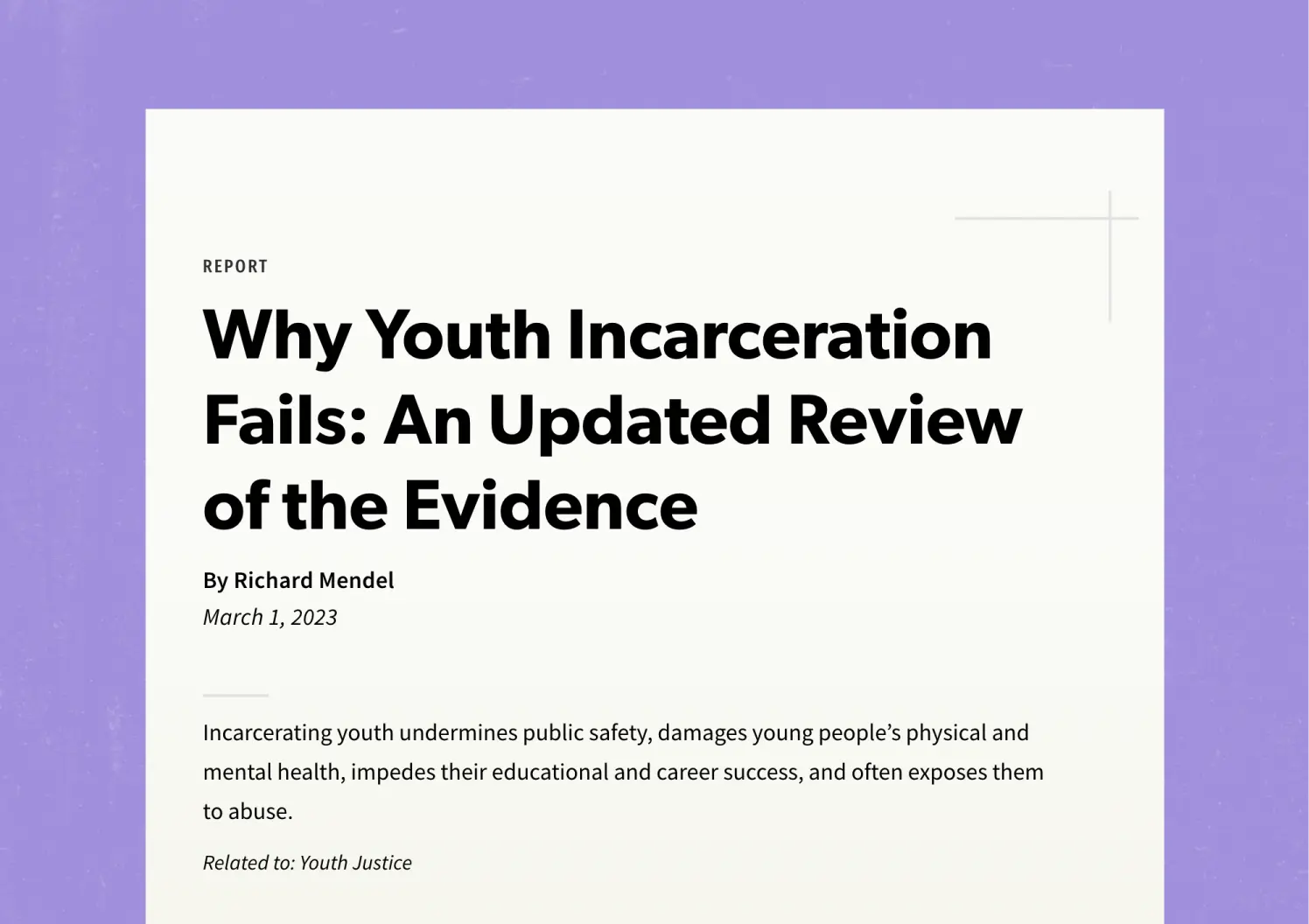
Corrections officers in Connecticut can and do use health-harming chemical agents like pepper spray on young people in state custody — in 2020 and 2021, there were 12 such incidents at Manson Youth Institution. There is no justification for using chemical agents on children. We are demanding the practice be banned.
The state also subjects young people to solitary confinement and restrictive housing, sometimes for months at a time, cutting them off from human contact and the support they need to grow. The consequences are well-documented and lasting. We are pushing to end the use of solitary and restrictive housing on every young person in Connecticut’s custody.
Meet basic obligations to young people in custody
Meet basic obligations to young people in custody
The state has a responsibility to educate, care for, and protect every young person in its custody. Connecticut is failing to live up to that responsibility. Inside state facilities, investigators have documented shortened school days, inadequate mental health and special education services, mold in ventilation systems, sewage backups, and prolonged denial of hygiene supplies. No mistake a young person can make relieves the state of its obligation. We are demanding it meet that obligation in every facility.
Train & equip staff to support young people
Train & equip staff to support young people
For as long as young people are in state custody, staff needs the tools and training to care for them properly. Many of the kids who enter the system have been failed by the institutions around them, and the relationship between them and the adults responsible for their care has to change.
Facilities need consistent programming for skill-building, emotional development, and trauma recovery. They need staff trained in de-escalation, restorative practices, and youth development. They need enough mental health professionals to support kids before they reach a crisis.
Strengthen oversight & accountability
Strengthen oversight & accountability
Connecticut should not need a federal court to ensure children inside its facilities are safe from abuse. Manson Youth Institution has been under federal oversight since 2019 because of conditions inside, and federal monitors have continued to find the state failing to meet its obligations. State-level oversight has not filled the gap.
We are calling for regular independent oversight of every facility holding young people in Connecticut, including unrestricted access for the Office of the Correction Ombudsman in all facilities. The kids inside these facilities should not have to wait for the next federal report to know their lives are being watched over.
Keep young people out of the system altogether
Keep young people out of the system altogether
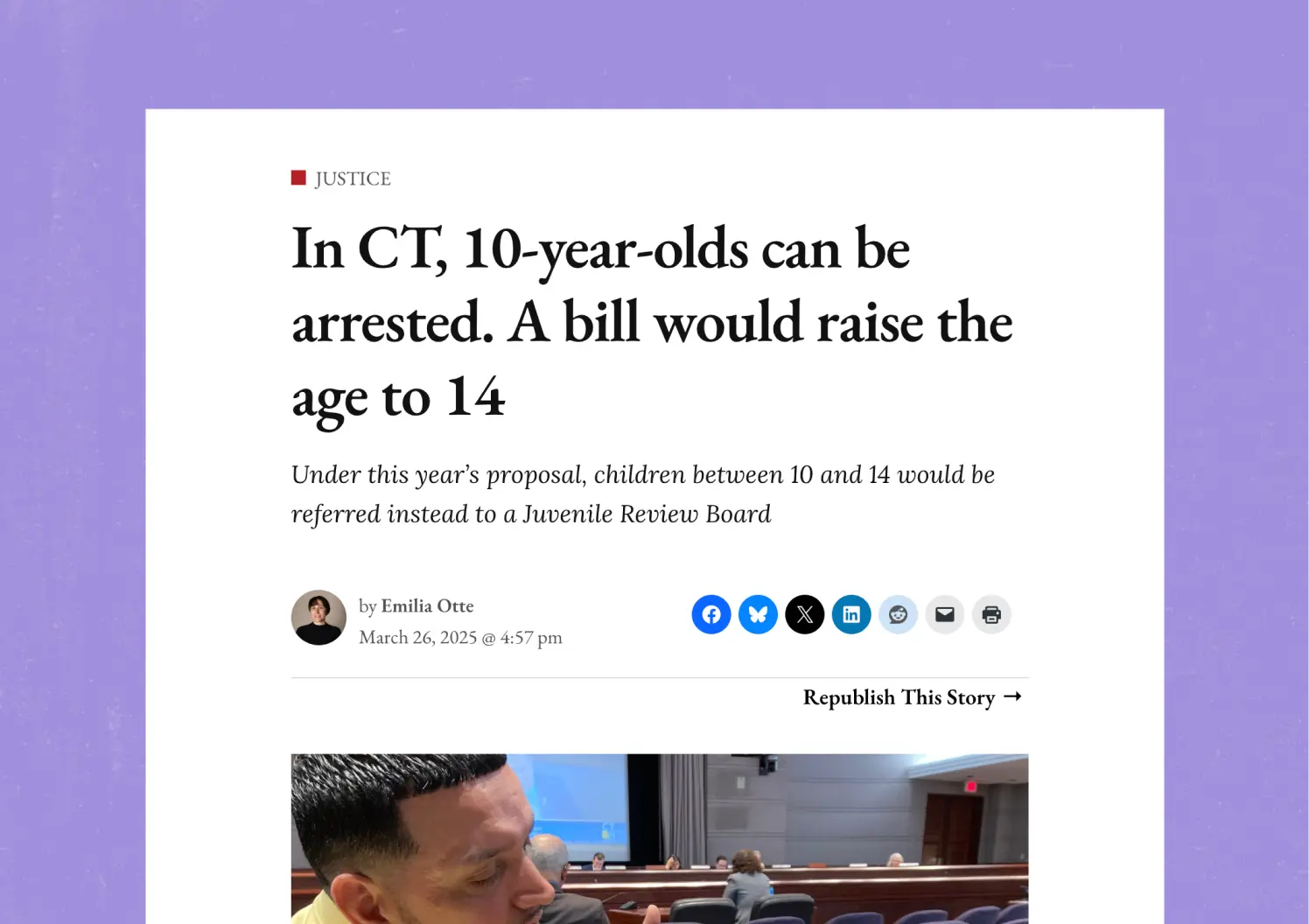
We’ve raised Connecticut’s minimum age of arrest before, and we are fighting to raise it again. The earlier a young person is pulled into the legal system, the worse their outcomes. We are also fighting to end the practice of sending young people into adult courts, where they face harsher penalties and fewer protections than the systems designed for their age would provide.